Magnesium for heart health comes down to relaxation. Magnesium helps the muscles in your artery walls let go and helps your body make nitric oxide, so blood vessels can open and blood moves more easily. Stress does the opposite. That’s the idea at the center of “Eating for a Calm Heart” by Rachel MacPherson in the November/December 2026 issue of Experience Life, and it’s the reason I wanted to write this post right before the holidays.
I picked up the magazine expecting holiday recipes. Instead, I got a really clear explanation of what stress does to the heart, and a reminder that what we eat during the busiest weeks of the year can either add to that load or take some of it off.
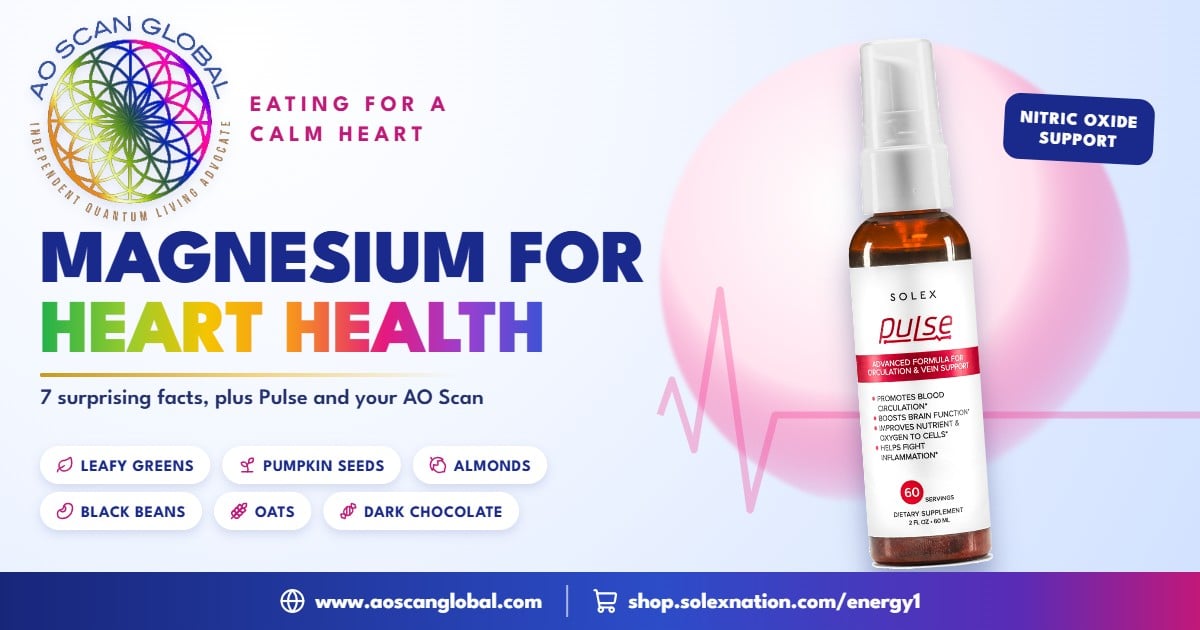
What Does Holiday Stress Actually Do to Your Heart?
Stress sets off your fight-or-flight response, and your heart feels it first. The article walks through the chain reaction in plain terms:
- Adrenaline and noradrenaline: speed up your heart rate, push blood pressure up and tighten the arteries.
- Cortisol: can raise blood sugar and wear down the immune system over time.
- Repeated stress: keeps those hormones coming, which can irritate the lining of your blood vessels and keep low-grade inflammation going.
Cardiologist Dr. Mimi Guarneri, president of the Academy of Integrative Health and Medicine, points out in the article that stress hormones are tied to heart risk on their own, separate from other factors. She also explains that inflammation and oxidative stress sit underneath a lot of what goes wrong in the cardiovascular system, and that anti-inflammatory foods can help.
For most of us, the holidays bring money pressure, packed calendars, family dynamics and shorter days all at once. You can’t cancel all of that. However, you can decide what goes on your plate while it’s happening, and that’s where magnesium for heart health comes in.
Why Is Blood Sugar the Starting Point?
Steady blood sugar comes first because it affects how calm you feel. Dr. Elizabeth Boham, medical director at the UltraWellness Center, puts it simply in the article: “When your blood sugar and insulin are balanced, you feel more calm.” She adds that you get more energy too, and that it’s good for your heart.
In practice, that means protein, fiber and healthy fat at each meal, so the cookie tray isn’t doing all the work. My own favorite habit is moving after meals. Even a short walk after dinner helps your body handle blood sugar, and it supports circulation too. If you read our recap on AO Scan food sensitivities, you’ll recognize sugar as one of the foods that shows up again and again. The two topics fit together.
Why Does Magnesium for Heart Health Matter So Much?
Magnesium matters because it helps your blood vessels relax, and stress pushes them to tighten. According to the article, it’s involved in more than 300 reactions in the body, including muscle contraction, nerve signaling and blood sugar control.
For the heart specifically, Dr. Boham explains that enough magnesium helps the muscles in the arteries relax, which supports healthier blood pressure. Here’s how the article lays out the connection:
- Under stress: your vessels tighten and your heart works harder to move blood.
- With enough magnesium: your body makes nitric oxide, which signals blood vessels to open so blood can flow more easily.
- When magnesium runs low: the article links low levels with blood pressure that runs high, an irregular heartbeat, and a higher risk of heart trouble. Dr. Guarneri also notes that low magnesium and low potassium are both associated with heart rhythm problems.
Magnesium also supports sleep and mood, and both tend to slip when life gets hectic. So when you think about magnesium for heart health, you’re really supporting the whole stress picture.
Which Foods Give You Magnesium for Heart Health?
Dark leafy greens, seeds, nuts and beans are the richest sources. The article’s list is easy to shop:
- Leafy greens: spinach and Swiss chard
- Seeds and nuts: pumpkin seeds, almonds and cashews
- Beans: black beans
- Fruit: avocados
- Whole grains: oats and brown rice
- A treat that counts: dark chocolate at 70 percent cacao or higher
Dr. Boham suggests a quarter cup of raw, unsalted nuts every day, which adds fiber, healthy fat and protein along with the magnesium. That’s an easy habit to keep through December. Put a jar of almonds and pumpkin seeds on the counter where the candy usually sits.
How Much Magnesium Do You Need?
Most adults need roughly 310 to 420 mg a day, depending on age and sex, according to the NIH Office of Dietary Supplements. Women generally need 310 to 320 mg and men 400 to 420 mg. The NIH sets the upper limit for magnesium from supplements at 350 mg a day for adults. Magnesium from food doesn’t count toward that limit.
Which Supplements Support Magnesium for Heart Health?
Magnesium for heart health starts with food. Still, the article points out that a diet heavy in processed food can make it hard to get enough magnesium from food alone. These are the forms it mentions:
- Magnesium glycinate and magnesium L-threonate: Dr. Boham’s picks. They absorb well and can support relaxation and sleep.
- Magnesium citrate: another option, though it can have a mild laxative effect. Dr. Boham notes that can be helpful if holiday food slows your digestion down.
Dr. Guarneri recommends testing before you supplement. Her rule of thumb is to use supplements to correct a shortfall, or for a specific goal you’ve set with your provider. I agree, and it’s the same thing I tell people about their scans: use the information to ask better questions, then talk with your healthcare provider.
Why I Always Look at Magnesium, Potassium and Sodium Together
Your heart runs on an electrical system, and minerals keep that system working. That’s why I never look at magnesium alone. Magnesium, potassium and sodium all affect the electrical signals that keep your heart beating in rhythm, so when one is off, the others are worth a look too. It’s one of the first things I check when someone asks me about their heart.
What Else Does the Article Recommend for a Calm Heart?
The rest of the article covers omega-3 fatty acids, fiber and polyphenols. The good news is that these come packaged together in whole foods. The article’s examples are simple: a handful of walnuts, a colorful salad or a cup of green tea.
- Omega-3 fatty acids: found in fatty fish, walnuts, chia and flax.
- Fiber: found in beans, vegetables, oats and whole grains, and helpful for steadier blood sugar.
- Polyphenols: plant compounds in berries, green tea, colorful vegetables and dark chocolate.
How Does Pulse Fit In With Magnesium for Heart Health?
Pulse fits in because it’s built around the same idea the article keeps coming back to: nitric oxide and blood flow. The article explains that magnesium helps your body make nitric oxide so your vessels can open. Pulse is Solex’s circulation supplement, and it supports nitric oxide from two directions.
What Is Pulse?
Pulse is a nano spray from Solex Global made to support your circulatory system, so oxygen and nutrients can reach your cells. Solex designed it for anyone who wants to keep up with their kids, their workouts or their hobbies with more energy.
What’s in Pulse?
- Vitamin B3 (niacin)
- Amino acid pathway: L-citrulline and L-arginine, which the body uses to make nitric oxide, plus L-ornithine and L-norvaline
- Dietary nitrate pathway: beet root powder and spinach extract, which provide nitrates the body can turn into nitric oxide
- Hawthorn leaf extract
Pulse isn’t a magnesium supplement. It’s a different route to the same goal of relaxed, responsive blood vessels. That’s why I like pairing it with a magnesium-rich plate rather than using it in place of one. Think of Pulse and magnesium for heart health as teammates.
In my experience, nitric oxide is the piece most people are missing. They think about cholesterol, salt and maybe exercise, but they rarely think about whether their blood vessels can open up and let blood flow. That circulation side is exactly what Pulse is designed to support.
How Do You Use Pulse?
Pulse is a spray. Solex’s directions call for 10 pumps in the morning and 10 at night, sprayed into the mouth. A 60 ml bottle holds 60 servings. Always follow the directions on your label.
How Much Does Pulse Cost?
- Retail: $43.75
- Autoship: $30.00
Prices can change, so check the Pulse product page for current pricing.
Pulse Safety Considerations
- Talk with your healthcare provider before using Pulse if you’re pregnant, nursing, taking any medication or have a health condition. That’s especially important if you take blood pressure or heart medication.
- Stop using it if you have a reaction.
- Keep it out of reach of children.
These statements have not been evaluated by the FDA. This product is not intended to diagnose, treat, cure, or prevent any disease.
Check Pulse Pricing & Availability →
Where Do You Look in the AO Scan for Heart and Circulation Patterns?
The AO Scan has three places that relate to the heart and circulation: Comprehensive, Body Systems and Vitals. Looking at all three together gives you a fuller picture than any one report on its own. If you’re paying attention to magnesium for heart health, these reports help you ask better questions. As always, these are energetic patterns for education, not medical findings.
Comprehensive Scan: Heart, Arteries and Veins
The Comprehensive Scan looks at the frequencies of more than 130 organs, cells, bones and other structures, and shows each one on a 1 to 9 scale. Readings from 1 to 4 lean underactive, and the higher numbers lean overactive. For heart-related patterns, look at:
- Organs and Cells report: the heart itself.
- Arteries report: the arteries, which ties in with the article’s focus on vessels that tighten under stress.
- Veins report: the return side of your circulation.
Body Systems Scan: Cardiovascular
The Body Systems Scan groups your results by system, and it has a dedicated Cardiovascular section that does a deep dive into the heart and circulation. Open that one first. The article also makes a case for checking a few others:
- Nervous System: stress starts with the fight-or-flight response.
- Endocrine System: adrenaline, noradrenaline and cortisol are hormones.
- Mitochondria and Human Cell: helpful context for how energy is showing up.
Vitals Scan: Cardiovascular and Minerals
The Vitals Scan looks at the energetic state of your blood biology. It’s also the scan that feeds the Intelligent Scan in Comprehensive, so run it first.
Vitals has its own Cardiovascular section, which is where I start. From there, I always look at the minerals:
- Magnesium: the relaxation mineral from the article.
- Potassium: works hand in hand with magnesium in your heart’s electrical system.
- Sodium: the other half of the electrolyte picture.
Want to learn how these reports look and what yours might be saying? Reach out to us here and we’ll walk through them with you.
How Can You Put This Together in a Session?
- Start with Vitals, then run Comprehensive with the heart, arteries and veins selected.
- Check the Cardiovascular section in Vitals, plus magnesium, potassium and sodium.
- Open Body Systems and look at Cardiovascular, Nervous System and Endocrine System.
- Ask about stress, not only food. Inner Voice can help with that conversation. Our post on trapped emotions and the heart goes deeper on that side.
- Pick one change. A daily handful of nuts, a green salad at dinner or a regular Pulse routine.
- Rescan later and compare. Keep any medical questions with your healthcare provider.
If you’re on a team and want help reading these reports, AO Scan Global offers one-on-one help.
Which Solex Products Pair Well With Magnesium for Heart Health?
- Pulse: nitric oxide and circulation support, and the focus of this post.
- SLEEP: Solex’s nano sleep spray. It contains magnesium citrate (32.5 mg) along with melatonin (300 mcg), a good fit if your sleep slips during the holidays.
- OMEGA PRO: omega-3 support for the fatty acid part of the article. It contains shellfish.
These statements have not been evaluated by the FDA. These products are not intended to diagnose, treat, cure, or prevent any disease.
Magnesium for Heart Health FAQs: 10 Questions People Ask
1. How does magnesium for heart health work?
Magnesium helps the muscles in your artery walls relax and helps your body make nitric oxide, which lets blood vessels open. That supports healthy blood pressure and blood flow.
2. Can stress really affect your heart?
Yes. Stress hormones raise your heart rate and blood pressure and tighten your arteries. When stress keeps going for weeks, those effects add up.
3. What are the best food sources of magnesium?
Spinach, Swiss chard, pumpkin seeds, almonds, cashews, black beans, avocados, oats, brown rice and dark chocolate at 70 percent cacao or higher.
4. What’s the best form of magnesium to take?
Experience Life’s experts mention magnesium glycinate and magnesium L-threonate for absorption and relaxation, and magnesium citrate if you want help with digestion. Ask your provider which one fits you, and consider testing first.
5. How much magnesium is too much?
The NIH sets the upper limit for supplemental magnesium at 350 mg a day for adults. Food sources don’t count toward that limit. Too much from supplements can cause diarrhea, nausea and cramping.
6. Does Pulse contain magnesium?
No. Pulse supports nitric oxide through L-citrulline, L-arginine, beet root and spinach extract, plus niacin and hawthorn. It works alongside a magnesium-rich diet.
7. Which Solex product contains magnesium?
SLEEP contains magnesium citrate (32.5 mg) along with melatonin.
8. Where do I find heart and circulation patterns in the AO Scan?
Start with the Cardiovascular section and the minerals (magnesium, potassium, sodium) in Vitals. Then run Comprehensive (Organs and Cells, Arteries and Veins) and open the Cardiovascular section in Body Systems.
9. Can AO Scan diagnose heart problems?
No. AO Scan is an educational wellness tool that shows energetic patterns. It does not diagnose or treat any condition. If you have concerns about your heart, see a qualified healthcare provider.
10. Should I take Pulse if I’m on blood pressure medication?
Talk with your healthcare provider first. Solex advises checking with a professional before use if you take any medication or have a health condition.
Where to Buy Pulse and Its Companion Products
Shop This Post’s Featured Solex Products
- Pulse: Solex’s nano circulation spray for nitric oxide support.
- SLEEP: nano sleep spray with magnesium citrate and melatonin.
- OMEGA PRO: omega-3 support (contains shellfish).
- AO Scan Subscription: the app behind the Comprehensive, Body Systems and Vitals reports.
Prices and availability can change, so check each product page for current details.
Magnesium for Heart Health: From a Magazine Article to a Calmer Holiday Routine
What I appreciated about this article is that none of it is complicated. Keep blood sugar steady, eat foods that give your body magnesium, and remember that stress has a physical cost, especially for your heart. Then use your AO Scan to see how your heart and circulation patterns change as your habits do. That’s magnesium for heart health in real life: small, steady changes you can actually keep.
If you’d like to go deeper on nutrients, our post on the methylated multivitamin is a good next read. You can also track your routines in the AO Scan Global Companion App.
Ready to See How Your Heart and Circulation Patterns Show Up in the AO Scan?
If you haven’t experienced an AO Scan yet, start with a demo. We’ll walk through your Vitals, Comprehensive and Body Systems reports together.
- Request a Free AO Scan Demo →
- Get Your AO Scan Subscription
- Become a Preferred Customer or Quantum Living Advocate
A Personal Note From Paige
My favorite way to take care of my health during the holidays is simple: I move after I eat. A walk after a big meal, even a short one, does a lot for blood sugar, and it’s good for your heart and circulation too. So if you try one thing from this post, try that. Then add a handful of nuts, a green salad, and a little kindness toward yourself when the calendar gets full.
If you’d like to see what your own heart and circulation reports are saying, reach out. I’d love to help.
Stop Guessing. Start Scanning.
Be Well & Do Good Things
Paige Maurer Wheeler
AO Scan Global
Independent Quantum Living Advocate
About the Author
Paige Maurer Wheeler is the founder of AO Scan Global, an Independent Quantum Living Advocate, AO Scan Global Team Leader, expert trainer, biohacker, mom, and purveyor of goodness. She helps individuals, families, wellness professionals, practitioners, and entrepreneurs explore AO Scan frequency technology through education, personal demonstrations, training, resources, and community support.
Paige believes there is no cookie-cutter path to using or sharing AO Scan. Her approach is to meet each person where they are and help them build around their experience, profession, goals, strengths, relationships, and desired level of involvement.
Her views and educational content are her own and do not represent official statements from Solex Global.
About AO Scan Global
AO Scan Global is an Independent Quantum Living Advocate organization and global community dedicated to supporting users of AO Scan technology through education, personal demonstrations, practitioner support, training, multilingual resources, product education, community connections, business guidance, and the free AO Scan Global Companion App.
AO Scan Global does not develop or own the underlying AO Scan technology and does not replace Solex Global, official Solex account systems, official technical support, or the browser-based AO Scan platform.
Our Relationship With Solex Global
AO Scan Global is an independent Solex affiliate. Solex Global owns the AO Scan technology and handles billing, official support and corporate training. Some links in this article are affiliate links, and AO Scan Global may earn a commission at no extra cost to you.
Credit
This post draws on “Eating for a Calm Heart” by Rachel MacPherson, published in the November/December 2026 issue of Experience Life magazine. Visit experiencelife.lifetime.life to read more from Experience Life. AO Scan Global is not affiliated with Experience Life or Life Time, and the experts quoted in the article have not reviewed or endorsed this post.
Educational, Product and Medical Disclaimer
AO Scan Global content is provided for educational and wellness purposes. AO Scan and related energetic wellness technologies are not intended to diagnose, treat, cure or prevent disease and are not a substitute for medical evaluation, diagnosis or treatment. Individuals should consult qualified healthcare professionals for medical concerns, including before changing their diet or starting a supplement, and especially if they have a heart condition or take blood pressure or heart medication. AO Scan encourages questions. Medicine answers medical questions. The two should never be confused.
These statements have not been evaluated by the Food and Drug Administration. Solex supplements are not intended to diagnose, treat, cure or prevent any disease. Product details and prices can change.