


Personalized Wellness Beyond One-Size-Fits-All Advice
“The future of wellness isn’t about finding the one perfect solution. It’s about learning to better understand the unique body you’ve been given.”
— Paige Maurer Wheeler
We Are Living Through One of the Biggest Shifts in Wellness History
For decades, wellness advice followed a familiar formula.
Drink more water.
Get more sleep.
Exercise regularly.
Reduce stress.
Eat more vegetables.
Those recommendations are still valuable. In fact, they form the foundation of many healthy lifestyles and will likely never go out of style.
However, something important has changed.
People are beginning to ask a different question.
Instead of asking:
“What works for everyone?”
They are asking:
“What works best for me?”
That single shift is transforming the wellness industry.
Today, people can observe their sleep, heart rate, physical activity, recovery, nutrition, hydration, stress levels and daily habits more easily than ever before. Smartwatches, rings, fitness trackers, glucose monitors, wellness applications and artificial intelligence tools have made personal information more accessible.
As a result, many people are becoming active participants in their wellness journeys rather than passive recipients of generalized advice.
Research into current wellness behavior also reflects this change. Digitally engaged consumers increasingly research, experiment and look for wellness approaches that feel relevant to their individual needs instead of simply following the same routine as everyone else.
I believe this is one of the most exciting developments we have seen in modern wellness.
Still, personalized wellness is not simply about collecting more information.
It is about learning how to use information wisely.
What Is Personalized Wellness?
Personalized wellness is an approach to well-being that considers the individual rather than relying only on recommendations created for the general population.
It may take into account:
- Daily habits
- Personal wellness goals
- Sleep and recovery patterns
- Nutrition and hydration
- Physical activity
- Stress and emotional well-being
- Environment and lifestyle
- Individual responses over time
Personalized wellness does not mean that basic health recommendations no longer matter.
Instead, it recognizes that the way each person applies those recommendations may be different.
Two people can follow the same eating plan and have completely different experiences.
Two people can complete the same exercise program and recover differently.
One person may thrive on an early bedtime, while another struggles to sleep at that hour.
The same stressful event may affect two individuals in entirely different ways.
That is because our bodies are constantly responding to our environments, choices, routines, relationships, nutrition, sleep habits and emotional experiences.
Therefore, the more thoughtfully we observe ourselves, the better prepared we become to make informed wellness decisions.
Personalized Wellness Is More Than Technology
When people hear the phrase personalized wellness, they often think first about gadgets.
Technology certainly plays an important role. However, personalized wellness is much bigger than any watch, ring, application, scanner or artificial intelligence platform.
It is a mindset.
It begins with recognizing that no two people are exactly alike.
Even people who share similar genetics, environments or lifestyles may respond differently to the same food, workout, supplement, bedtime or stress-management technique.
Technology can help organize observations. Nevertheless, the real value comes from the awareness those observations may create.
A handwritten journal can be a personalized wellness tool.
So can a conversation with a knowledgeable practitioner.
Tracking hydration may reveal a pattern.
Recording sleep habits may help someone recognize which routines leave them feeling more restored.
Paying attention to mood, energy, movement and nutrition can also provide meaningful context.
The tool is not the destination.
The goal is greater awareness.
The End of “Average”
Many traditional health and wellness recommendations are based on population averages.
Those averages are valuable.
They help researchers identify trends. They support public-health recommendations. They also give people useful starting points.
However, none of us is actually an average.
Each person has a different combination of:
- Genetics
- Environment
- Stressors
- Nutritional habits
- Sleep patterns
- Activity levels
- Responsibilities
- Wellness goals
- Personal history
Personalized wellness does not reject broad health guidance.
Instead, it adds another layer to the conversation.
Rather than asking only:
“What should everyone do?”
It also asks:
“What information could help me make a better decision for my own body and lifestyle?”
That question changes everything.
It moves wellness away from blind imitation and toward thoughtful observation.
It also helps people recognize that another person’s perfect routine may not be their perfect routine.
Curiosity Is Replacing Guesswork
One of my favorite phrases has always been:
Stop Guessing. Start Scanning.
However, the heart of that message is not simply about scanning.
It is about curiosity.
Curiosity encourages us to ask better questions.
Better questions can lead to more productive conversations.
Those conversations may help us make more thoughtful decisions.
Whether someone keeps a wellness journal, works with a practitioner, monitors sleep, practices meditation, tracks nutrition or explores educational wellness technology, the broader goal is often the same:
To become more aware.
Awareness is powerful because it gives us a place to begin.
You cannot recognize a pattern that you never observe.
You cannot determine whether a new routine is helping when you are changing five things at once.
You cannot have a meaningful conversation about your habits when you have no idea what those habits actually look like.
Curiosity does not require perfection.
It simply asks us to pay attention.
Why Personalized Wellness Matters More Than Ever
We now have access to more wellness information than at any other point in history.
At times, that abundance of information can feel empowering.
At other times, it can feel completely overwhelming.
One article recommends fasting.
Another recommends eating every few hours.
One expert praises cold plunges.
Another questions whether they are appropriate for everyone.
One person insists that everyone should wake up at 5:00 a.m.
Another builds an entire wellness philosophy around getting more rest.
Social media delivers thousands of health, fitness and wellness opinions every day.
Therefore, the challenge is no longer finding information.
The challenge is deciding which information is useful, credible and relevant to you.
That is where personalized wellness becomes valuable.
It encourages people to observe their own patterns rather than automatically following every new trend.
It also creates room for context.
A wellness practice that is appropriate for one person may not be appropriate for another. Personal goals, medical history, medications, age, fitness level and professional guidance can all matter.
Personalized does not mean doing whatever we want.
It means using better information to make more responsible decisions.
Wellness Is Becoming More Connected
For years, wellness has often been divided into separate categories.
Sleep.
Nutrition.
Movement.
Hydration.
Stress.
Recovery.
Energy.
However, our bodies do not operate in isolated compartments.
Poor sleep may influence recovery.
Stress may change eating habits.
Hydration can affect how someone feels during physical activity.
Movement may support resilience, mood and sleep.
Nutrition can influence energy and daily performance.
Everything is connected.
The more we appreciate those relationships, the more complete our wellness decisions can become.
This is why I encourage people to think about patterns instead of isolated events.
Sometimes there is not one obvious factor.
Sometimes several small factors are interacting at the same time.
A difficult night of sleep, an unusually stressful day, limited hydration and skipped meals may each seem minor on their own. Together, however, they may tell a much more meaningful story.
Personalized wellness helps us step back and look at that bigger picture.
Technology Is a Tool—Not the Destination
As someone who has spent years educating people about wellness technology, I believe it is important to keep technology in its proper place.
Technology should not replace common sense.
It should not replace qualified medical care when medical care is needed.
It should not make every decision for us.
Instead, technology can help us become better observers.
A wearable may help someone recognize changes in sleep or activity.
A wellness application may organize daily habits.
A journal may reveal that energy changes after certain routines.
An educational scanning technology may encourage someone to ask new questions about patterns they had not previously considered.
However, more information is not automatically better information.
The value depends on whether the information is understandable, relevant and used responsibly.
Current discussions surrounding wearable technology increasingly emphasize the importance of looking at longer-term personal trends instead of overreacting to one isolated score or measurement.
That distinction matters.
One unusual night does not define your sleep.
One difficult workout does not define your fitness.
One stressful day does not define your well-being.
Technology becomes most valuable when it helps us recognize patterns over time and supports better-informed conversations.
Where AO Scan Fits Into Personalized Wellness
One of the questions I hear most often is:
“Where does AO Scan fit into personalized wellness?”
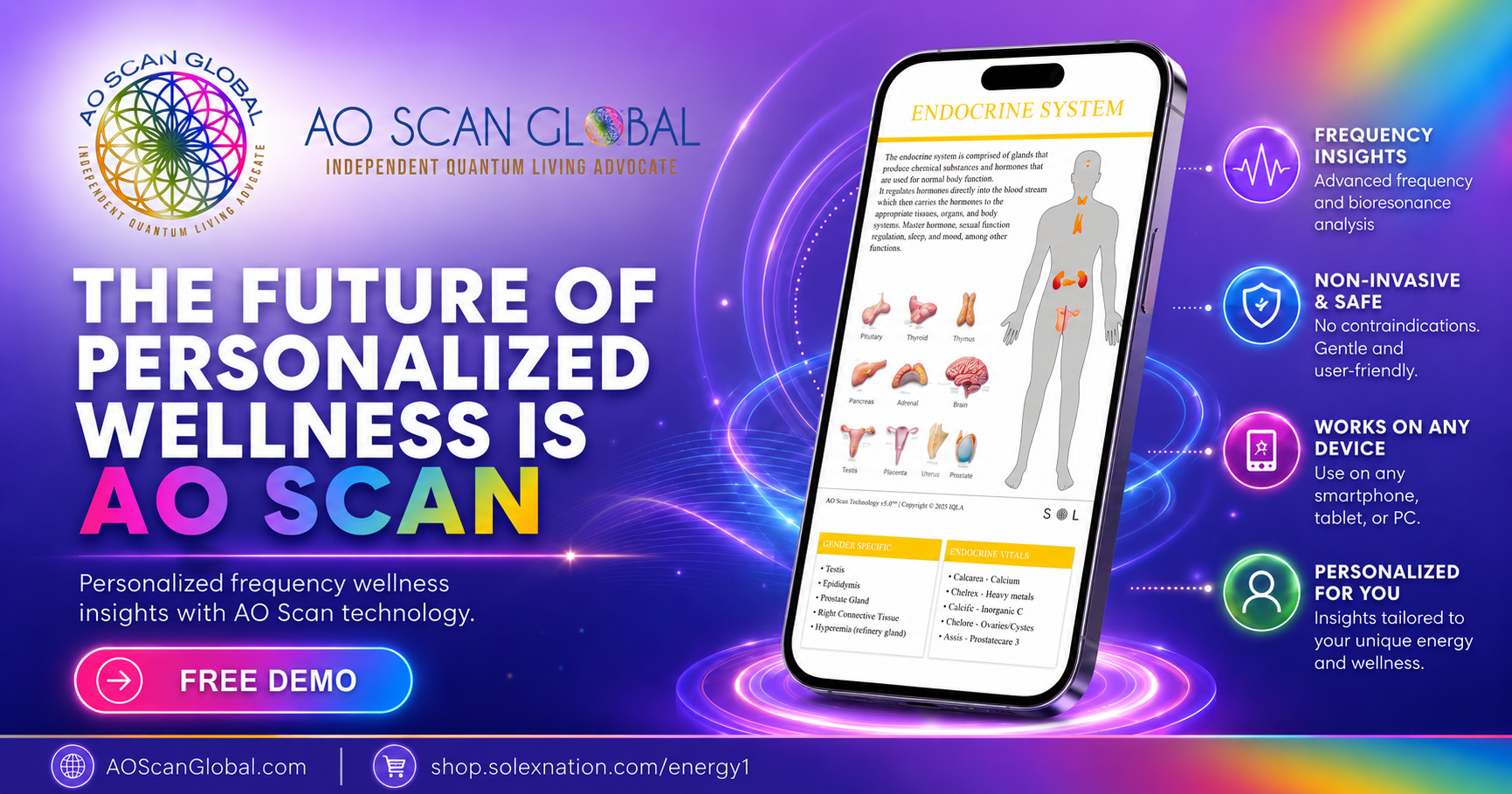
I believe AO Scan is best understood as an educational wellness technology.
It is not designed to diagnose, treat, cure or prevent disease.
Instead, many individuals use AO Scan as one part of a broader wellness routine that may also include thoughtful nutrition, movement, hydration, mindfulness, restorative sleep and conversations with qualified healthcare professionals.
For me, AO Scan represents another opportunity to become curious.
It can encourage people to look at wellness patterns, explore educational reports and ask more thoughtful questions about their daily routines.
It can also provide a structured way to engage with different areas of wellness without suggesting that one scan, score or report tells the entire story.
That distinction is important.
AO Scan should not be viewed as a replacement for medical testing, diagnosis or professional care.
Rather, it can serve as an educational tool for people who want to become more engaged in their wellness journey.
The AO Scan Global Companion App was created to make education, training, support and trusted AO Scan resources easier to access in one place.
For those who are new to the technology, a free AO Scan demo can provide a simple introduction to the educational experience before deciding whether AO Scan belongs in their personal or professional wellness routine.
Personalized Does Not Mean Perfect
Personalized wellness is not about tracking every metric, testing every trend or trying to control every variable.
It is not about turning your daily life into a never-ending experiment.
It is not about becoming anxious when one number, score or report looks different than expected.
In fact, the most helpful wellness routines are often the ones people can use consistently without feeling overwhelmed.
Personalization should create clarity, not pressure.
It should help you notice what supports you.
It should help you recognize what may be working against you.
It should help you make adjustments with greater intention.
The goal is not perfection.
The goal is a better relationship with your own patterns.
That may mean learning when your body needs more rest.
It may mean recognizing that a certain routine supports your energy.
It may mean noticing that stress affects your sleep more than you realized.
It may simply mean becoming more honest about what your habits actually look like.
Personalized wellness works best when it is practical, flexible and sustainable.
Look for Patterns, Not Isolated Readings
One of the most important principles in personalized wellness is learning to look for patterns over time.
An isolated reading can be interesting.
A repeated pattern can be meaningful.
That distinction matters whether someone is reviewing a sleep score, hydration log, fitness tracker, glucose reading, journal entry or AO Scan report.
One unusual result should not automatically create fear or drive a major decision.
Instead, ask:
- Has this appeared more than once?
- What was happening in my life at the time?
- Did sleep, stress, hydration, food or movement change?
- Is this information consistent with how I feel?
- Would it be helpful to discuss this with a qualified professional?
Context is essential.
A person may sleep poorly because they traveled.
Energy may feel different after a stressful week.
Recovery may change after an intense workout.
Hydration, illness, medication, hormones, nutrition and daily responsibilities may all influence the way someone feels.
That is why one data point rarely tells the full story.
The most useful information often appears when you zoom out.
Patterns can help us become more thoughtful.
They can also help us avoid reacting emotionally to every change.
This is especially important in a world where technology can deliver new scores, alerts and recommendations every day.
More information should not create more confusion.
It should help us ask better questions.
Five Ways to Begin a More Personalized Wellness Routine
You do not need an expensive collection of devices or a complicated protocol to begin.
A more personalized wellness routine can start with a few simple steps.
1. Choose One Meaningful Goal
Start with one area that matters to you.
Perhaps you want to improve sleep.
Maybe you want steadier energy.
You may want to become more consistent with movement, hydration or stress support.
Choosing one meaningful goal helps reduce noise.
It also makes it easier to notice which changes are helpful.
2. Observe a Few Relevant Patterns
Track only the information that connects to your goal.
For sleep, that might include bedtime, wake time, evening screen use, stress and how rested you feel.
For energy, it may include meals, hydration, movement, sleep and time of day.
For recovery, you may observe training intensity, soreness, sleep and rest days.
The purpose is not to collect everything.
It is to notice what matters.
3. Change One Variable at a Time
When people begin a new wellness routine, they often change everything at once.
They start a new diet.
They add multiple supplements.
They change their workout schedule.
They begin meditating.
They adjust their bedtime.
Then, when something improves or worsens, they have no idea why.
Changing one variable at a time can make your observations more useful.
It gives your body time to respond.
It also gives you a better chance of understanding what may be influencing the outcome.
4. Review Information in Context
Always consider what else was happening.
Travel, stress, weather, workload, illness, medication changes, hormone shifts and family responsibilities can affect routines and results.
A pattern without context can be misleading.
A pattern with context can become a more useful conversation starter.
5. Know When to Involve a Professional
Personalized wellness should never become a substitute for appropriate medical care.
Persistent symptoms, significant changes or serious concerns deserve attention from a qualified healthcare professional.
Wellness information may help you prepare better questions.
It may help you describe patterns more clearly.
However, it should not be used to self-diagnose or delay necessary care.
The Human Side of Personalized Wellness
No device knows your complete story.
No application understands every detail of your life.
No scan, score, report or algorithm can fully account for your relationships, responsibilities, beliefs, environment and lived experience.
That human context still matters.
Personalized wellness is most useful when technology supports the individual rather than dominating the individual.
Your observations matter.
Your experience matters.
Your goals matter.
Your conversations with trusted professionals matter.
There is value in data.
There is also value in wisdom.
The future of wellness will likely include more artificial intelligence, more connected technology and more individualized recommendations.
However, the human being should remain at the center of the process.
Technology can organize information.
It cannot replace discernment.
Technology can highlight a pattern.
It cannot decide what that pattern means for every person.
Technology can prompt a question.
It cannot replace the importance of a thoughtful conversation.
The Future of Wellness Is Informed, Connected and Individual
The shift toward personalized wellness is not a rejection of foundational health advice.
Sleep still matters.
Movement still matters.
Nutrition still matters.
Hydration still matters.
Stress support still matters.
What is changing is the way people apply those principles.
Instead of searching for one perfect routine for everyone, we are learning to explore what may be most supportive for the individual.
Instead of following every trend, we can observe our own responses.
Instead of reacting to one isolated result, we can look for patterns.
Instead of handing over every decision to technology, we can use technology to become better informed.
That is the future I find exciting.
A future where people become more engaged.
A future where wellness information leads to better questions.
A future where individuals, families and professionals can use educational tools more responsibly.
A future where curiosity replaces guesswork.
For me, AO Scan fits into that future as one educational option within a much broader wellness lifestyle.
It is not the destination.
It is one tool that may help people become more aware, more curious and more involved in their own wellness journey.
And that may be one of the most valuable shifts of all.
Ready to Explore Personalized Wellness for Yourself?
A free AO Scan demo can offer a simple introduction to the educational wellness experience.
You can explore how the process works, review sample reports and decide whether AO Scan may fit into your personal wellness routine, family routine or professional practice.
Already familiar with AO Scan and ready to begin?
Frequently Asked Questions
What is personalized wellness?
Personalized wellness is an individualized approach to well-being that considers a person’s goals, habits, lifestyle, environment and responses over time. It builds on general wellness guidance while recognizing that different people may respond differently to the same routine.
How can technology support personalized wellness?
Technology can help organize information, track patterns and encourage greater awareness. Wearables, journals, wellness applications and educational tools may help people notice changes in sleep, activity, stress, hydration and other daily habits. These tools should support thoughtful decisions rather than replace professional medical care.
Where does AO Scan fit into a personalized wellness routine?
AO Scan is best understood as an educational wellness technology. Many users include it as one part of a broader routine that may also involve nutrition, movement, hydration, mindfulness, restorative sleep and conversations with qualified healthcare professionals. It is not intended to diagnose, treat, cure or prevent disease.
Be Well & Do Good Things
Paige Maurer Wheeler
AO Scan Global
Independent Quantum Living Advocate
About Paige Maurer Wheeler
Paige Maurer Wheeler is a biohacker, mom, truth seeker, purveyor of goodness and experienced AO Scan educator. She leads the largest global team of AO Scan users and helps individuals, families, wellness professionals and practitioners better understand how to use AO Scan frequency technology responsibly in everyday life and professional settings. Her views are her own and do not represent Solex Global.
About AO Scan Global
AO Scan Global is the largest global community of AO Scan users dedicated to helping individuals, families, wellness professionals and biohackers learn about AO Scan frequency technology and related products. Our educational resources support users across the United States and in AO Scan Brazil, AO Scan Canada, AO Scan Australia, AO Scan UK, AO Scan Europe, AO Scan Netherlands, AO Scan Mexico and beyond.
AO Scan Global is independently operated by an Independent Quantum Living Advocate and is not Solex Global.
Important Disclaimer
AO Scan is used for educational wellness insights and pattern awareness. It is not intended to diagnose, treat, cure or prevent any disease and should not be used as a replacement for qualified medical care, diagnosis or treatment.
The terminology used within AO Scan reports and databases does not represent medical diagnoses or clinically validated treatment claims. Users should always work within the limits of their professional license, certification or scope of practice and consult qualified healthcare professionals regarding medical concerns.